Soil & compost
How to Start a Compost Heap: Greens, Browns and Common Problems
A beginner's guide to making garden compost: what to add, how to balance greens and browns, and how to fix a heap that smells or won't rot.
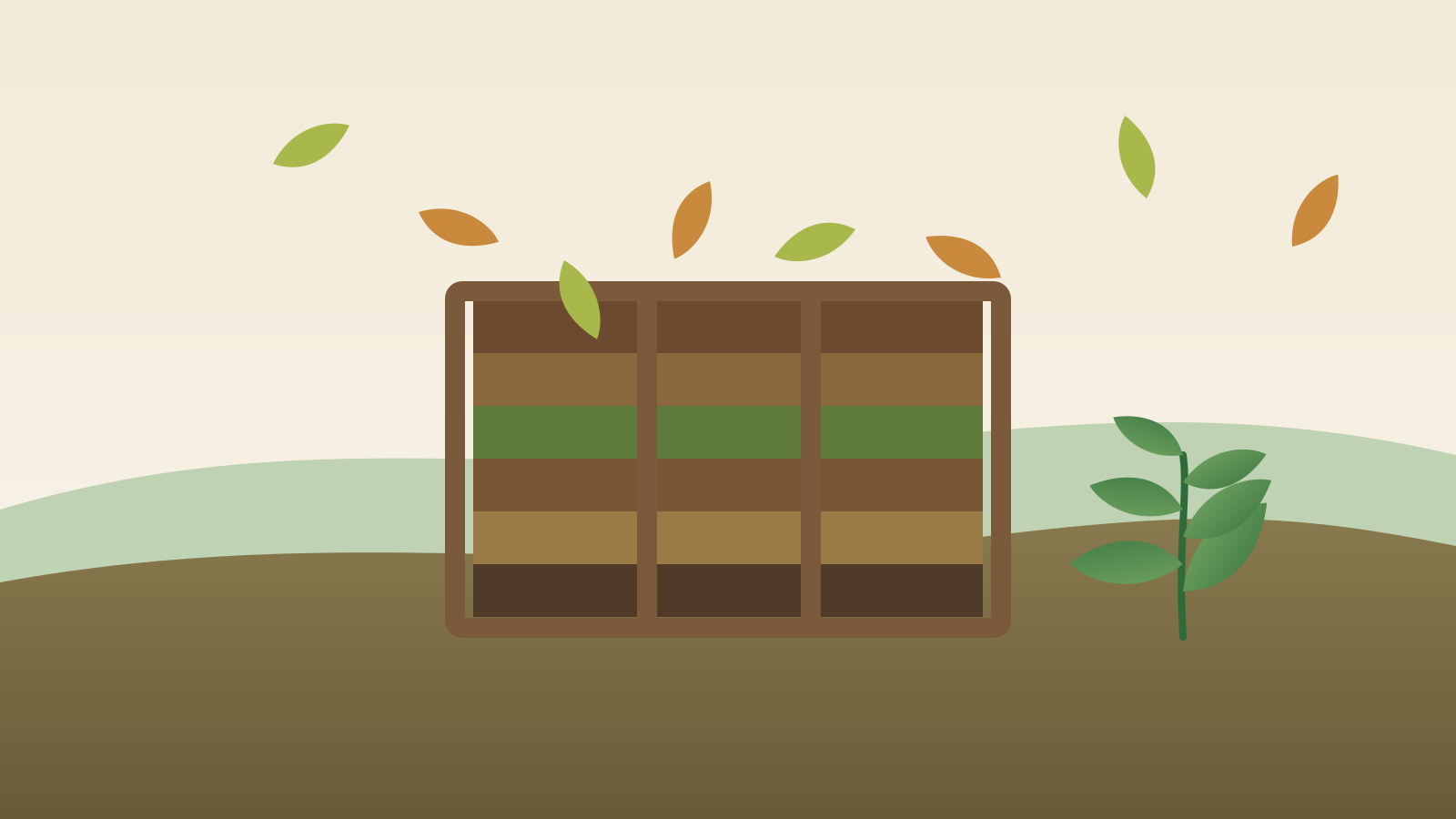
Choosing a bin or heap
You don't need to buy anything to start. Common options:
| Option | Good for | Things to know |
|---|---|---|
| Open heap | Large gardens with lots of material | Simple, but can look untidy and dries out faster |
| Plastic "dalek" bin | Small gardens, kitchen waste | Tidy and keeps moisture in; harder to turn |
| Pallet bays | Regular turning | Two or three bays let you move compost from one to the next |
Put it somewhere easy to reach from the kitchen, ideally on soil rather than paving so excess water can drain away.
What to put in
Think of two groups and aim to mix them.
Greens (soft, moist, break down quickly):
- Uncooked fruit and vegetable peelings
- Tea leaves and coffee grounds
- Grass clippings (in thin layers)
- Soft plant trimmings and spent bedding plants
Browns (dry, woody, give structure):
- Plain cardboard and egg boxes, torn up
- Shredded paper
- Dry autumn leaves
- Straw and woody prunings, chopped small
What to leave out
- Cooked food, meat, fish and dairy – they can attract rats and other pests
- Pet waste from cats and dogs
- Diseased plants
- Perennial weed roots and weeds with seeds, unless your heap gets very hot
- Glossy or printed plastic-coated paper
Building the heap
- Start with a layer of coarse brown material such as twiggy prunings to help air flow at the base.
- Add greens and browns as you collect them, mixing rather than adding thick layers of one thing.
- If it looks dry, sprinkle it with water; if it looks wet and slimy, add more browns.
- Turn the heap with a fork every few weeks if you can. Turning adds air and speeds things up, but an unturned heap will still rot – just more slowly.
Fixing common problems
| Problem | Likely cause | Fix |
|---|---|---|
| Smells bad, slimy | Too many greens, too wet, not enough air | Mix in torn cardboard or dry leaves and turn |
| Nothing is happening | Too dry, or too many browns | Add greens and water, then turn |
| Flies around the bin | Exposed food scraps | Bury fresh scraps in the middle and cover with browns |
| Lots of woody bits left | Pieces too large | Sieve them out and return them to the next heap |
Using your compost
Finished compost is a soil improver: spread it on beds as a mulch or fork it lightly into the top of the soil. It is not a substitute for potting compost on its own, because home-made compost varies a lot in texture and nutrients.
Planning where to use it? See how to plan a small vegetable bed.
Quick checklist
- Bin or heap sited on soil, easy to reach
- Greens and browns mixed in roughly equal volumes
- Damp like a wrung-out sponge
- No cooked food, meat, dairy, or pet waste
- Turned when convenient